Showing posts with label Pre-Adoption Support. Show all posts

Wednesday, March 19, 2014

Older Child Adoption: Challenges and Ideas For Parents {Guest Post by Marissa}

I have no idea how to raise my kids.

I read all the books, listened to the seminars, formed friendships with other adoptive parents, and did all the other things a good adoptive mommy is supposed to do.

And every day I am faced with challenges and behavioral issues that I have no idea how to overcome.

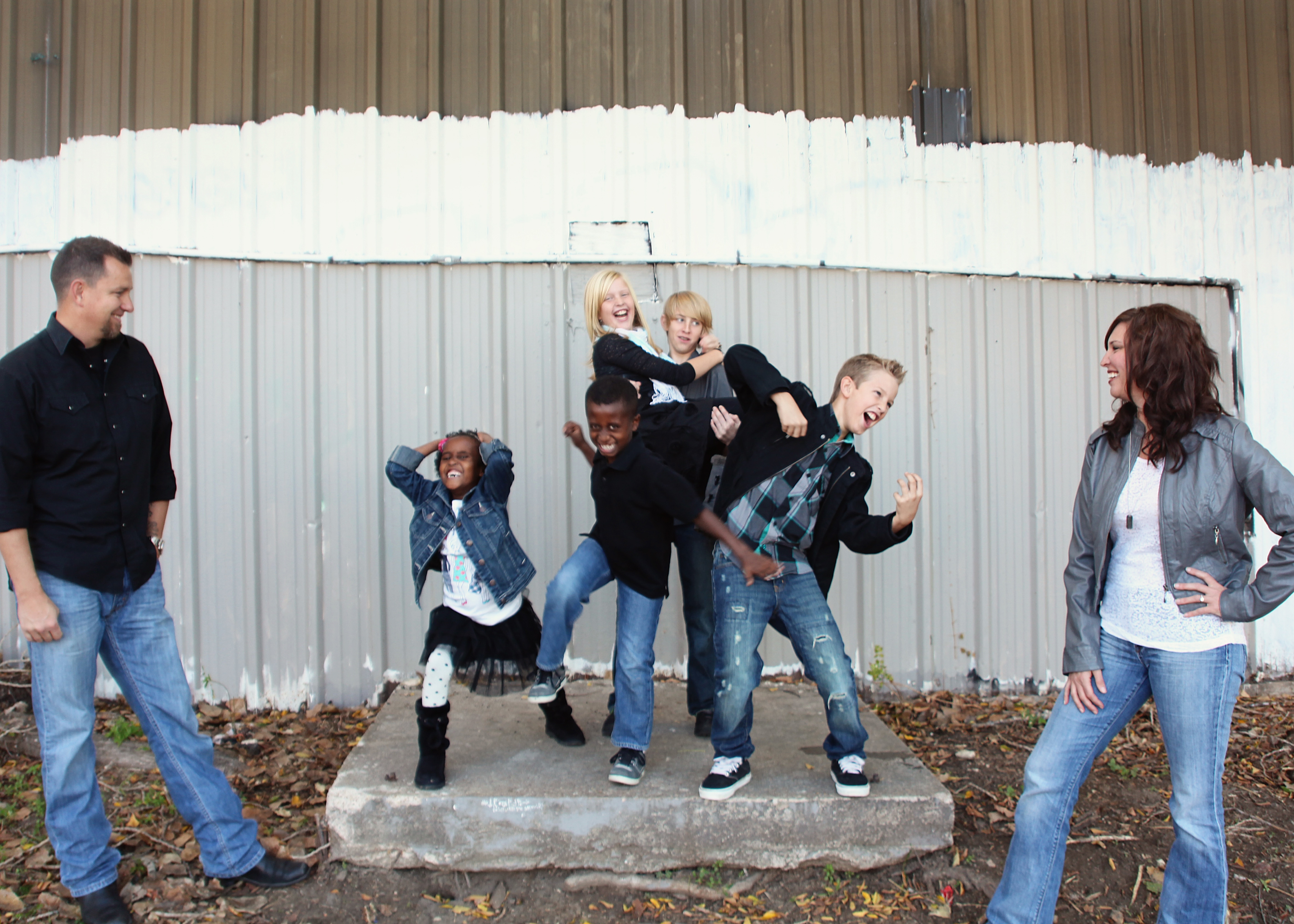
I have older kids. A son, 15 , and a daughter, 9 (and an 11 year old on the way! :)). They've been home 16 months, and they are AMAZING. If you'd told me four years ago when we started the adoption process that we would have big kids, I would have laughed. I mean, our age range started out 0-5. My husband and I are super young ourselves. And now I can't imagine adopting UNDER the age of 8. Funny how things change.


Older kids are such an amazing joy to have. They are incredible people with amazing potential. My kids have filled my life with so much sunshine and love. It's like having two best friends. I can't say enough about how much I love being a family with them. There are so many precious older children waiting to be adopted, but sadly, there are a lot of fears and stigmas that come attached to the thought of adopting older kids. And to be truthful, there ARE lot of unique challenges. I want to address some of the ones that we have personally faced, and that I believe to be common among older adopted children. I want to share some of our experience and provide a realistic view of what adopting an older child can look like. These kids are phenomenal, and this is the most amazing and rewarding experience, but that does not mean that it's an easy one. Some challenges we have faced are:
  • Skin color and minority/majority status: My kids are from Ethiopia, and they are not used to being the minority, or looking different. It's uncomfortable for them. And it makes our status as a family more questionable to those around us; no one ever thinks that my kids are actually my biological kids. People always assume we are babysitting or in some Big Brother/Big Sister program. (Part of this is also because my husband and I are so young.) We are never left alone....the topic of adoption ALWAYS comes up, and it frustrates my kids. They want to be seen as a "normal" family. They don't want to be approached, questioned and petted every five minutes, or given dirty looks when we go out. Neither do I. It almost feels like having paparazzi....we CANNOT escape. My kids are also frustrated that we are a different color than they are. We live in a very diverse town and know many interracial and adoptive families, but they realize that in America, a large percent of the population is Caucasian. And for the first time in their lives, they feel inferior because of their skin color. They want our family to match. They want to pretend that they are my biological kids. They want to be white. And nothing I can say about how beautiful and special, how perfect and amazing they are, can change this. 
  • Intense grieving: Adopted kids, no matter how they come to us, have been traumatized. Uprooted from everything and everyone they knew. Brought to a different place, with a different culture, language, and expectations, and placed permanently with a family that they just met. And that's not including whatever their personal history has been up to that point, and the possible pain from that.
  • Cultural Differences: Clothing, hairstyles, earrings/piercings, how much and what area of skin is exposed, makeup, views on beauty, inappropriate comments or behavior when something is disliked, time values, appropriate greetings, daily schedules, food, holidays, stereotypes and stigmas (my kids believed some WEIRD things about specific other cultures/races) are some of the cultural differences we have faced. 
  • Previous life history: Adoption comes from brokenness. One family is built from the destruction of another. Abandonment. Death. Abuse. Starvation. Illness. War. These are some of the circumstances that bring these precious children into our families. And there is always pain. 
  • Fears: Older children often struggle with fears such as abandonment, not being loved because they aren't babies, fear of the dark, of being alone, fear of being "sent back", fear of never succeeding, etc. Their previous life history and the fears that may accompany that can also haunt them. 
  • Independence: Many older children are almost completely independent in their birth country, carrying huge responsibilities, and acting as an adult. When they are adopted, and take on the title as someone's child, this new role can be an issue. I think of it similarly to an elderly person having their license taken away. Losing that kind of independence can be devastating and beyond frustrating. Having to accept a stranger as the role of your parent (when that is a role YOU may have had) is equally as hard.  
  • Personal Beliefs: Again, their personalities and how they view the world are already established. They don't just come to America and accept everything we may think or believe here. 
  • Self Worth: Many things can impact this.....shame, abandonment, past history, skin color, education level or lack thereof, language, etc. 

So after 16 months, do I finally feel like I have an idea of how to parent my kids??? Nope. I still just basically go off my "adoption gut" instinct. Typical American parenting techniques DO. NOT. APPLY. "Let them cry it out." "Send them to their room." "Use tough love." Ignore them." "Take away their possessions as punishment." No, no, NO.

Figuring out how to train your precious adopted kiddos is TOUGH. I want to show grace and love, and yet there also have to be boundaries. I have to figure out if a behavior problem is an adoption issue, or a heart issue. I have to teach them how to handle struggles and situations appropriately. And every day, I am winging it. So here are the things that are working for our family:
  • No isolation. Period. No being left alone in a room..... no PERCEIVED isolation or abandonment. EVER. We don't send our kids to their room to think over their behavior if they need a time-out. Instead, we use "time-ins" when needed, which for us means we go to the living room and sit together on the couch. We stay with them for the entire duration of the "time-in". 
  • No walking off when you're upset, because this can trigger the list of FEARS. For us, this means we have to deal with things in the moment. Staying calm, not getting upset, and addressing an issue immediately, is key for us when dealing with any misbehavior. We stay together and solve it as a family. Even if it means hours of sitting in a room together. And by hours, I mean, I have sat for 36 hours STRAIGHT in a room with a child who needed to realize that this family will NEVER leave them. 
  • If they have a fear, don't try and break it by forcing them to face it. This only seems to intensify the fear and make it more of an issue. The more I ignore something (as far as not constantly bringing attention to it), the less of an issue it becomes (for the most part). Example: Child X is afraid of the dark. So I go first EVERWHERE. Every time. It doesn't matter if I am in the middle of something and it's inconvenient (and it often is). I go, turn the light on, then walk them to the area, show them it's safe, and stay with them till they are done with whatever it is that they needed to do. I don't leave them alone, EVER. Is this time-consuming? YES. Inconvenient? YES (especially because this happens like 15x a day at our house). Who cares. I want my child to feel SAFE. And for older adopted kids, that may be a feeling/concept that they have never experienced. 
  • Constant reassuring. I tell my kids a thousand times a day how much I love them, how I will never leave them or let them go, how they light up my life. If I go out and my husband is home, I text them and tell them how much I love them and how I can't wait to see them. We FaceTime a million times when I travel. They need to KNOW that they are cherished, and that I am coming back. Permanency is a new concept for them. 
  • Words of Affirmation. My kids need to hear daily, a thousand times, that they are loved, beautiful, smart, kind, precious. That I am proud of them. That they are treasures. My gift from God. My blessings.
  • Make a big deal when a family member walks in the door after being out. No matter who it is, when one of us walks through the door, everyone stops what they are doing and runs to greet the returning family member with big hugs. We tell them how much we missed them and how much we love them. 
  • Hugs/Safe Touch. I hug my kids about 50,000x a day. I hold their hands. I high-five them. They sit next to me/on my lap. My daughter hangs on me like a monkey. Actually, we nicknamed her "The 60lb Appendage". :)

  • Write love notes. I write them notes and leave them everywhere for my kids to find. Somehow having it down on paper as proof seems to help with reassurance. I write them little notes and leave them on their pillows when they are sleeping. I put notes in their sock drawers. In their school books. In the iPad. My son actually showed me that he has kept almost every note I've written him. We had to get a big bag for them. :)
  • Wear the same clothes/accessories. Lots of adoption books recommend rubbing a baby with your lotion or shampoo, etc. We apply the same concept to our big kids. My son loves to look like my husband. They use the same deodorant scent. And he and I try to match with baseball hats or sweatshirts, or paracord bracelets. My daughter and I will wear the same color clothes, nail polish, and matching earrings. I spray her with my body-splash. This is a huge deal to our kids. 
  • Give them something that's of value to you. I gave my kids each one of my rings and they wear them on a necklace. It really helped them feel secure. It helped them know that I trusted them. It helped them feel like I wouldn't ever just walk away from them when they had something "expensive" of mine. The ring that my daughter wears has their names engraved on it, which also goes a long way in making her feel secure. Extra tip....yes, give them something valuable, but also prepare for the item to be something you may never see again, due to multiple possibilities (accidental loss, or possible decimation in a meltdown where they may not be thinking clearly......).  
  • Be honest and open. My kids' personal experiences have caused them to have a desperate need for openness. I mean, we talk about EVERYTHING as a family. This was tough for me and my husband at first, because we didn't expect to have to share everything as if we were in a four-person marriage, but it's what helped us gain our kids' trust. Their background dictates how they perceive their surroundings and situations, and in order to assure them that we were not doing damage to them behind their backs, we became a family who talks everything out. All the time. Even the smallest, most innocent things. There are no secrets. Sound ridiculous? Maybe it is. It doesn't matter. My kids needed absolute transparency. And now that we have the hang of it, it's kind of nice. And also, now that we have earned their trust, we don't have to be as extreme as we were in the beginning. 
  • Offer re-dos, and show them/act out the various options for handling situations and then have them act it out too. We do re-do's about 1,000x a day. The goal of a re-do (for us) is to teach our kids how to appropriately and respectfully handle a request or situation. The two examples below are pretty much how re-dos in our house go now, but originally, they didn't start out this smoothly! :) 
Me: "Child X, can you please come help me set the table?"
Child X: "No! I don't want to. I'm tired."
Me: "I understand that you're tired. But that is not how you answer Mommy. If Mommy asks you to do something, you need to do it or ask respectfully to be excused. Then Mommy will say yes or no.  Whatever my answer is, you need to accept it without complaining. You may always ask to be excused, but you must be respectful. I'm going to ask you again:
Me: "Child X, can you please help me set the table?'
Child X: "Mommy, may I please stay here? I am tired."              
Me: "I'm sorry you're tired sweetie. Yes, you may stay. Thank you for such nice asking."

or................

Child X: "Mom, I'm hungry."
Me: "You may eat a banana."
Child X: "Yuck. I want an orange!"
Me: "That's not a respectful response.Can you please try again?"
Child X: "Mom, I don't want a banana. Can I please have an orange?"
Me: "That was great asking! Yes, of course you can have an orange."
  • Lots of  "yes's". Similar to the "re-do's" example above, we try to say "yes" to our kids as much as possible. Even if what they are asking isn't my preferred option for them, I want to teach them how to ask in a kind and respectful manner. For example, my kids love the iPad. And although I hate to admit it, they play on it more than I want. But if they are asking for it in a polite, respectful manner, and it is within reason, I will give them permission to use it (with a time limit). Teaching them how to ask was a huge thing for us, and has made everyone's life more enjoyable. 
  • Allow food to be available 24/7. A lot of adopted kids have food issues. Many have never had enough to eat, and will gorge or hide food out of self-preservation. Our kids have a need to know food is always available to them and they are allowed to eat fruit, toast, or pretzels any time of day.
  • If you give options, keep it simple. Especially when you first come home. Kids who have not had a lot of possessions or options are easily over-stimulated. We kept it super simple. As in, two choices. Red or blue? Even that can be overwhelming for them. We noticed that when our kids had unlimited choices, they became greedier, crankier, and were unable to decide on one thing, much less, one of the actual options. Example: Don't ask, "What fruit do you want?" (My kids would take a hundred years to pick something and then wouldn't eat it and would want something else entirely.) Instead, ask, "Do you want an apple, or a banana?"
  • Write out a daily schedule. For some reason, this helps my kids feel more secure (when they know in advance everything that will be happening), and it gives us a chance to talk about the day, and what will be expected. It also gives us a chance to review proper behavior for certain settings (bank/meeting new people/etc.)
  • If your kids don't want to talk about something that is bothering them, trying writing about it back and forth. I am referring to eliminating speech, literally. Even if they don't have a lot of language, sometimes it is easier to express themselves through writing, plus it removes the need for eye contact, which can be scary for them. So try writing and pictograms. This worked great for one of our kids until they had enough trust and language to express themselves.  
  • Allow your kids to talk. My kids tend to start talking (specifically about their past life) at the most inconvenient times (school, bedtimes, etc.) and will talk for HOURS. Not kidding. But it is so necessary. For their healing. For you to fill in some gaps about their past. For them to share their burdens. To build trust. It will help you understand why they react to situations and triggers the way that they do. It's exhausting and can eat up half your day, but it is something my kids desperately crave. Definitely set a time limit if necessary (we do that for minor topics), but let them talk. I often feel like, "We don't have time!!!" but then I remember that if I cut them off, they might never open up to me again. Now, or ever. NOW is the time to establish that trust and vulnerability. 
  • Set some crucial rules and stick with them. We have six rules in our house. We wrote them out and posted them in our kitchen. 1. No ignoring. 2. No complaining. 3. No bossing each other around. 4. If you have a problem, tell Mom or Dad (no sulking/fighting/bad attitudes). 5. LOVE. FORGIVE. 6. No lying.  
  • Be consistent. Be consistent with your rules. EVERY time. Exhausting? Inconvenient? Yup. Worth it? YUP. 
  • Understand that your kids are often little kids in big kid bodies. There's a general rule in the adoptive community that says something like, "For every six months in an institution, estimate your child's emotional development back one year." So, someone who is age 5, and spent two years in an institution would most likely have the emotional development of a one year old. 
  • Don't overreact to bad behavior and use positive reinforcement for good behavior. Lots of times, adopted kids may do something to try and get a rise out of us. Example: Don't like that we said no dessert until dinner is eaten? Let's vomit up our dinner. A possible response could be, "I'm sorry you threw up. Let's go ahead and clean it up. If you are so sick that you are throwing up, then dessert would just make you sicker, so no dessert tonight.". Example two: Don't like that we said physical reactions mean we can't go out with friends today? Let's break something. (Sigh. Stay calm and carry on. Oh, and removing electronic privileges is a good motivator!) When they do something good, or kind, or thoughtful, or respectfully, praise the heck out of them!
  • Logic doesn't apply. Our kids have different backgrounds, culture, and experiences than us. When afraid, or in a meltdown, they are in survival mode. Logic is not part of this equation.   
  • Don't sweat the small stuff. It is a little overwhelming to think of all the possible behavioral issues that may need to be addressed, so don't sweat the small stuff. Worry about the big stuff, and the matters of the heart. Worry about if your child is blatantly disobeying you, versus when they grab your cup from in front of you without asking and take a swig. Worry about how they are addressing people and not about the fact that when they shower, the bathroom floods. Definitely explain table and shower etiquette to them, and help them clean the bathroom, but don't worry about it. That will come. Address the big things first. I also feel like this helps the relationship grow; otherwise I would be nagging them all the time! Maybe one child's chore is the dishes, and they didn't get done, BUT the child has been exceptional to their sibling all day. Praise them for that. And forget the dishes (or wash them yourself). They're just dishes. 
  • Offer them the opportunity to earn money. It teaches them to be responsible. It teaches them the value of things. It teaches them hard work and motivates them. And it gives them life skills. My kids have ALL my cash. They shovel, do laundry, can clean the fridge or microwave, mow the grass, and clean the basement. They LOVE earning money. They have a few regular daily chores, but these are optional extras, with the chance to earn some $$$. And they feel good about themselves. Plus, it keeps them off the iPad. ;) 
  • Hurtful words hurt. But your child is probably hurting worse. Sometimes you will get hit with words. Words that cut, lacerate, and destroy. Words that truly crush your heart. It sucks. But hopefully, it's a season. And often, they aren't truly what the child is feeling. They are a reaction (probably to fear of some sort, or extreme pain from their loss). When these daggers are thrown at you, try your best to respond with something that gently counters them. Example: "I DON'T LOVE YOU!!!!" "Baby, I am SO sorry that you are hurting. I wish I could take your pain. I love you, baby." "YOU'RE NOT MY MOM!!!!" (After thousands of hours fighting for them, nurturing them, giving them everything, this one HURTSSSSS.) "Baby, you will always have two moms. Your first Mommy loved you so much! And I do too. I am so sorry that life can be cruel. I can't imagine what you are going through. I'm so sorry, hunny! But I love you very, VERY much. Forever. Hunny, it's okay to be mad. It's okay to cry. Baby, when you hurt, I hurt. Because I LOVE you. My heart is your heart." 
  • These kids may have had to be adults in their previous life. So acting like a child may not be natural. My kids had life experiences that caused them to be independent. And that carries over to our current family life. Also, because of cultural differences, my kids had a hard time with some of the boundaries here. No, you can't stay at a location alone. No, you may not go grocery shopping alone. No, you may not bike through heavy traffic miles away by yourself. No, you can't go swimming by yourself. Yes, you need to go to bed when I tell you. Yes, you need to eat what I tell you. Etc, etc.  
  • Set the example you want to be. In everything. And apologize first. Try to respond to your kids in the way you want them to respond, even if it doesn't make sense. And apologize first. Even when you're not technically wrong. Example (this scenario just happened to us a couple days ago): Child X does something with a silly face and crazy eyes that remind me of a character from the movie, "A Shark's Tale", (this child's favorite). I teasingly say, "Okay, my little Fish, enough of your silliness, come get your coat on so we can go out." Child X beings to cry and then becomes hysterical. In-between sobs, they manage to say (after coaxing) that I didn't respect them and called them a bad name and they are angry and hurt. I am completely confused (and slightly annoyed). But I pulled Child X into my arms and said, "Heyyyyyyyyyy. I am so sorry that you feel hurt. Baby, "Fish" isn't a bad name. I didn't call you that to be mean. I said it because you reminded me of 'A Shark's Tale' with your silly face. I didn't know that you would be hurt by it. I really am sorry, hunny." Child X, after resisting for a minute, buried their face in my shoulder and began to sob and tell me something that had happened multiple times in their previous life regarding being called names, and it broke my heart and also gave me more insight to their behavior. And it reminded me that apologizing first breaks down barriers, promotes humility, and teaches your child the correct way to handle a situation. 
  • Tell them they are loved, even when you want to scream. When my kids have a meltdown, the worse they get, the more I try to love on them. I may have to be firm and not back down, but instead of disicpline or punishment, I often just sit with my kids and tell them how much I love them. This isn't easy. In the heat of the moment, when something outrageous has happened, the last thing I want to do when they are pitching a fit is tell them how much they mean to me. But this method has actually brought my kids to tears and stopped a meltdown. When they are out of control, I tell them what incredible people they are. What I love about them (smiles, laughs, personality traits, hair, eyes, etc.). How much I loved them before I knew them. Before I met them. Before I saw pictures. I tell them how wonderful and special they are, how much God loves them, and what wonderful people they are going to be. I tell them how proud I am of them. At first it was hard. REALLY hard. When I wanted to react in frustration or anger, telling them a million reasons why I loved them seemed weird. But the result was stunning. I literally watched the walls that surrounded my kids' hearts crumble to dust after hearing they were loved, even during their worst moments.  

  • When you are going through a hard time, make some "love lists" for them. Page 1. "Words and Phrases for ____________." My page included words like "always", "forever", "mine", "always a family," etc. Page 2. "Words I Associate with _________." (Insert positive words that make you think of this child.) Page 3. "Reasons Why I Love ______ (insert child's name)." (A list of reasons why you love them.) For us, making these lists during a hard time showed our kids that we don't only love them when they are "good", but that we love them when times get tough. 
Does all this sound scary and/or overwhelming? Sure it does! You are taking a half grown person into your family and trying to balance everything they know and are, with everything you know and are. And you know what? It is the coolest thing ever. That doesn't mean it's easy, or perfect. But it's incredible. These kids just need one thing. Unconditional love. You aren't responsible for how they have been raised, what happened to them in the past, and how that impacts them now. Your job is to love them; to let them know that no matter what happens, no matter what they do, they are your precious child, and you will always LOVE them. My kids have developed and matured SO much since coming home. I could cry every time I think about how far they have come, and what incredible people they are growing to be. I am so, so proud of them. They are truly proof that circumstances don't have to define you. That the hardest days don't last forever. That love conquers all.

They are proof of redemption.


A big thank you to Marissa Ruper for writing this blog post for Give1Save1! She blogs regularly at their family's adoption blog here. (The Rupers were our featured family last November. Click here for the Ruper's featured family post.)

Tuesday, March 4, 2014

Creative Fundraising {Guest Post by Chantel}

Hey friends, I'm Chantel and blog over at A Harvest of Blessing. My husband and I are in the process of adopting from South Africa and I think the only person that is more excited than us is our three year old daughter, she keeps asking for a brother AND a sister.


When we decided to take the first steps forward in our adoption nearly two and a half years ago, we knew that it wouldn't be financially possible for us to do this on our own, which is probably one of the reasons God asked us to step forward - our trust needed to be in Him. That being said, I don't think that gives us license to just sit by and ask God to move - we need to be willing to put work in too. Over the last few years we've done a few different things to help fundraise for our adoption, some of them have been official fundraisers and other things have been unofficial (like when we sold our kitchen table and chairs, we didn't tell the people that bought it that the money was going towards our adoption).

Since most couples I know don't have savings accounts of $30,000+ already waiting for them, I am excited to share a few of the things we have done to raise the money needed. We haven't had one huge fundraiser that brought in $20,000, we've raised it $100 here and $100 there, and over time it adds up to $1,000 and then $10,000.

  • extra work – since I have my teaching certificate I am very fortunate to be able to work as a substitute teacher. I’ve been getting a few days a month and we have been able to use all that money towards adoption expenses. My husband has also been doing some web stuff on the side in the evenings and on the weekends. For us this brings in about an extra $500 a month (except in the summer when I don't teach). 
  • arts and crafts – I have seen many people turn their creativity into something they can sell (Beth Cupitt is the master at this and the one that totally inspired me). I made canvases for a few months and was able to raise around $1,000-$1,500. I have also made and sold some herb planter boxes and wooden growth charts, that was about another $800-$1,000. Each year shortly before November our town has a craft and bake sale, this year there were a few families that are adopting that were selling baking and I was there selling some crafty stuff, right before Christmas is a great time too because everyone has someone to shop for!
 
  • photography – I had a photography business a few years ago and decided to use those skills. Two years ago I booked sessions over the course of a few months and did the shoots by donation. This last fall I set aside two weeks and advertised 30 minute sessions (again by donation), I had about 12 sessions and made about $1,500 during those two weeks. (I know not everyone is a photographer, but if you know someone who is, chances are they would be willing to donate their services for a few sessions.) I also have a photography workshop I teach, both in-person and online which has brought in just over $1,000 in the last few months. 
  • selling stuff – we have gone through our house and purged a lot (like the aforementioned kitchen table) as well as clothes, other furniture, books and videos. Most of it I've sold on a local Facebook buy and sell page (in our area that's the easiest and quickest place to sell stuff). 
  • affiliate programs – there are a couple different affiliate programs out there, we were able to fundraise through Ordinary Hero and Once Was Lost
  • furniture restoration - last summer we were able to find some awesome vintage pieces at garage sales and thrift stores that we repainted and then sold, like an awesome vintage ladder, wooden chairs, night stands and old school desks turned into chalkboard desks. We even have a couple projects sitting in our basement now, waiting for the weather to warm up so we can start working again! (Just a tip if you go this route: most of our paint we were able to buy was mis-tinted so it was quite a bit cheaper than buying new paint off the shelf.) 
In the last two years we've been able to raise about $20,000 through our various avenues, a HUGE help! There are so many other ideas out there as well, these are just the ones that we have done. I hope this has helped to inspire you a little. Even if you don't think these are things you can do on your own I would always recommend asking a friend to help. Furniture restoration not your thing? Ask a friend who would be great at it to help, you can purchase the supplies and they can donate their time!

Wednesday, February 26, 2014

Hosting & Adopting the Older Child {Guest Post by Erin}

I am so excited to share another guest post with you today! In June 2013, we featured the Johnson family on Give1Save1 Europe and raised $2,166 for them to adopt a sibling group of three boys from Ukraine. On November 14, 2013, D (age 11), N (age 9) and E (age 7) came home from Ukraine and joined their forever family. Erin has written an update for us about their adoption journey. I thought it would be encouraging to pre-adoptive and post-adoptive families and families considering orphan hosting!


We hosted our two oldest boys for a total of 3 times before adopting them all. I am a volunteer for our hosting organization and I can't say enough about how awesome older kids can be BUT also how I think hosting first is important if you have other younger kids in the house. Its not really an "interview process" for the kids, but a chance for you to get to know them and them to get to know you. The older kids in Ukraine have a choice if they want a family to adopt them. They have to write a letter saying they want to be adopted. We didn't go into hosting with the intent to adopt older boys. We just wanted to give an orphan a summer away from the orphanage. What ended up happening was we fell in love with them. We had three little kids already. Our two boys were 6 and 4 and our daughter was 5 when we hosted N for the first time in the summer of 2012. We decided to host D and N for Christmas mostly to prove to ourselves that what every said was true; you cannot adopt kids that much older than the ones you already have. Well, they were wrong. A few days before the boys had to go back to Ukraine, D asked us to adopt them all. We started the process a few days after they left. We hosted D again for the summer while waiting for our paperwork to be submitted to Ukraine. It was a great chance to bond more with just him, and for him to learn English. The first time we hosted D, he stayed zipped up in his jacket almost the entire time. He was so hurt and withdrawn. When he came back for summer, he was a different kid. He walked out with the host group up on his tip toes looking for me, asking where our other kids and the dogs were at!

We had to wait and wait and wait for our boys to come available for international adoption. When we FINALLY made it to Ukraine and walked into their orphanage it was like something out of a dream. The facilitator was telling us how the boys still had to agree to be adopted and he thought that they would probably say yes, but we had to ask them anyways. We sat down in the director's office and in came our boys. Every time we hosted, we met the boys with huge welcome signs at the airport that said, "Welcome to America!" They came in to meet us with welcome signs of their own that said, "Welcome to Ukraine Mother & Father." I cried. The director said, "So do you want them to adopt you?" "DA!!!"

We've been home for 3 months now and while we're all still adjusting, it has been amazingly smooth. With the two oldest having been here so much, it was like they just walked back into our house like they never left. They had beds, clothes, toys, and knew where everything was. The youngest boy (E) is the sweetest little guy and happily followed his brothers to America and a new life without ever looking back. We have had our share of the kids working through the new dynamic of additional siblings, and there have been fights, but nothing really mean spirited. Mostly we've had some frustration over our new kids feeling like they have to write their name on every.single.thing. that is theirs and wanting to start WWIII over someone else touching it or always always always wanting to be eating. These kinds of things are to be expected though and have been pretty easily addressed. Our boys started school within 3 weeks of being home and are doing really well. They were in school in Ukraine so it made for an easier transition to just enroll them here with our other kids as well.

The things I hear the most from people about hosting are, "I would host, but I don't think I could send them back. It seems cruel." Well, to them I like to present a question. If you died, and your kids were in an orphanage and someone had a chance to love them but only for a little while, would you rather they just left them and did nothing at all? Or would you rather they loved on them, got them dental care, bought them glasses, fed them, prayed over them, clothed them, taught them, and sent them back as they cried because they loved your child? Yes, its easier to do nothing, but I don't think our hearts do much good for God if they aren't breaking for what breaks His. An orphan's life is already cruel. Hosting offers hope.

The other thing I hear is, "I'd adopt, BUT I don't have the money." To them I say, neither did we! We started the process by sending a $200 check and a prayer with our application. The prayer was, "God if this is what we are supposed to do, You have to bring the money." Eight months and $40,000 later we were in Ukraine.


If you are interested in orphan hosting, please check out Children's Cultural Connection and New Horizon's for Children.


Thank you to Erin for sharing! Erin blogs at The Johnson Journals.

Tuesday, October 29, 2013

Waiting Well {and a Giveaway!}


Welcome my friend, Kelli, to our blog.  She has also offered an awesome giveaway for you! Details at the bottom....

To Wait:  to stay in place in expectation of………

Families in process of international adoption are by my definition, professionals at waiting. 

We wait and we wait…… on paperwork, on waitlists, on calls, on emails, on approval, on clearance.  The list feels endless sometimes. 

I admit there have been times in the wait I’ve wanted to lay on the floor like a two year old and kick and scream.  Sometimes it’s just plain hard.

So much of the time the “wait” comes with a negative connotation.  It might have a little bit to do with the 200 good intentioned people that ask us “when?”, “still?”, every week they see us. 

I recently posed a question about “the wait“ to some other adoptive moms & the responses I got were so beautiful and encouraging.
They said,
“My heartache & desperation has brought me into a connection with the Lord that is so deep & intimate I get chills when I think about it”.

“God changed my heart”.

 One mom stated she used the wait to enjoy time with her family before it grew and another recognized how God used the wait to refine her.  

Everyone’s wait looks so different. 
In my personal “wait” journey (which I never would have predicted would be more than 3 years) I’ve had the time I’ve needed to heal from the loss of my mom.   

Beth Moore said in her study on Esther, “never in our wait is God inactive”.   Although we may grow tired of hearing,  “ it’s all God’s timing,” perhaps we could try to see the wait from a different perspective.    Maybe we could let God use the wait to make us more like Him.   

The Bible is so full of promises for those who wait. 

Because of the Lord’s great love we are not consumed, for his compassions never fail. They are new every morning; great is your faithfulness.  I will say to myself ”the Lord is my portion; therefore I will wait for Him”.  Lamentations 3:22-24 

I’m determined not to waste the “wait”.  How about you?


Check out these other encouraging verses for your wait:
Isaiah 40:31, Habakkuk 2:30, Ephesians 3:20, I Peter 5:6-7, Proverbs 16:9, Psalm 37:5, Proverbs 21:30, Matt 19:26 , Isaiah 54:10, I Thes 5:24, Habakkuk 3:17-19, Heb10:23, Isaiah 26:3-4, Luke 11:9, Proverbs 3:5-6, Psalm 4:8, Psalm 44:3, Psalm 37:7, Rom 15:13, James 1:12, Jeremiah 32:17, Psalm 40:1-3

                                                                                          -Kelli 
To enter the giveaway for one of her beautiful photographs, leave a comment with who you would like to have in your picture if you win! 

More about my friend...
Hi!  My name is Kelli Belt.  I’m a wife and mom of two boys, 12 & 9 and part of my heart is in Ethiopia as we wait the adoption of our daughter.

God has recently called me to use our "wait" to support a ministry in our daughter's birth land through the expansion of my photo gift business and recent partnership with Mercy Branch. Check it out @www.thenandnowdoubletakes.com


Wednesday, August 28, 2013

Being Prepared

I'm adopting a toddler! She should be joining our family very soon, so I've been getting our house ready for her.  We have to baby-proof everything, put the finishing touches on her room, we just bought a booster seat for our dining room and I'm in the market for a car seat.  Busy, busy!    But, more importantly, we're trying to prepare for her needs.  I've been reading, trying to gain a better understanding of what she may experience when she leaves the home she knows and joins ours.

"Adoptive parents will want to have at least a rudimentary knowledge of the developmental tasks of toddlers so they can respond appropriately to their child's behaviors and plan activities that stimulate their development. Children need to be parented according to their developmental age, which may not correspond to their chronological age. Many adopted toddlers display acute grief during their first weeks and months at home, seen in crying, withdrawal, poor appetite, seeking behavior, sleep difficulties, fear, or infantile behaviors. Acknowledging and supporting their child's grief is one of the first acts of love adoptive parents can give their new toddler. Grieving toddlers should be supported in their need to grieve the loss of former caregivers. Offering well-known food and maintaining a familiar routine is comforting. Accommodating a grieving toddler's need for being fed or comforted in a manner usually reserved for infants also supports the grief and provides a wonderful opportunity to develop attachment."    Read more at Rainbow Kids,  Toddler Adoption: More Than You May Expect.

Parents who've already brought children home, what did you do to prepare for your child's needs?


Wednesday, July 17, 2013

Adopting Older Kids--From a Mama Who's Been There!


    The beautiful Lebel family, minus their daughter,G, whose picture can't be posted yet in accordance to foster care policy. 

I am happy to introduce you to Camille, a fellow mom whose "story" is one you want to hear. Family, love, Jesus....all of the important stuff.  Thanks, Camille, for being so open with us and sharing from your heart. 


Adopting Older Kids With Younger Kids at Home: the Lessons We Hope to Learn

Two years ago, if you had told my husband, Charlie, or me that we were about to add three teenagers/young adults to our family, we’d likely have shared a giggle and shuffled you off to a white-padded cell. I mean….adding unkempt rooms with piles of reeking laundry, angst-filled relationship drama, missed curfews, and locust-like eating habits? Who does that?

We do, apparently. Because when God says, “Hey, I have some people for you to love,” you don’t respond with “But dude, I really need my junk room!” 

So now we have Ian, 20, and Herdest, 19—our “unofficially adopted” guys and Ellie, our two-year-old, adopted domestically as an infant. And as of about two months ago, we’ve proudly welcomed G., our 17-year-old daughter, who we’re adopting from foster care.

There’s so much I’d like to share with you about adding older kids to your family. How there are concerns about adopting out of birth order, but it’s not as scary as it might seem. How yes, it’s challenging, but also filled with wonderful blessings. How all kids deserve families, and there are thousands right now alone and waiting.  

But alas, neither of us has all day, so I’m going to attempt to stick to one thought-process.

So, some of the questions we often get from people who find out we have three older kids living in the house with our toddler-aged daughter fall along the lines of:

Aren’t you worried about her? How does that work? Is that safe? What will she learn from the older kids?

(Actually, we get much more invasive, ridiculous, and ignorant questions, but they make me want to say not-nice words, and since I’m guest blogging, we’ll keep it polite, mmmkay?)

I understand that these concerns come from a well-meaning place, but first off, let me point out that such questions can come across as rather offensive.

Have we considered the emotional well-being and adjustment needs of our daughter?
Heck no. We just thought we’d completely change her family structure with absolutely no preparation and see what happens.

Gah! Of course, we worry about our daughter. We worry probably in the same way you worried when you got pregnant with child #2, #3, etc. We prepared in the same way you would if you planned to move in an ailing grandparent, a stepchild, etc. Family structures change all the time, folks. We prepare as best we can, show some extra love and grace, and move on with life.

Logistics and Safety

Probably the most irritating insinuation from others is that we would build our family in a way that risks the safety of its other members. We understand that there are many stereotypes about foster kids (especially older kids) out there, but if you’ve spent any time around them, you realize that many fears are unfounded.

Please understand, I’m not saying that every day is roses and kittens. There are hard moments every day, and times that require extra vigilance. I would never advocate anyone jumping into foster care or older-child adoption without some serious preparation and a strong support system. Kids need supervision. Period. Know how much is required for your family to stay safe. Biological or adopted, it’s up to you as parents to know your kids, their maturity, their needs, and their capabilities, but it can work. 

Yes, our older kids and our toddler have vastly different needs and interests, but as it turns out, they complement one another better than expected. The mall? The bookstore? The park? We can generally find something of interest for everyone. And after Ellie goes to bed, we have time for homework, games, or movie night with the older kids. Also, I’ve generally found that as long as a destination has working wi-fi and food, teenagers stay moderately happy.

Also, the older kids generally prove to be an amazing help with the toddler. To clarify, I didn’t welcome older kids with expectations they’d become live-in nannies to my daughter. Just as I wouldn’t leave my two-year-old with any random sitter, I’m not leaving her with someone simply because they’ve been in our house a few weeks. However, as it turns out, Ellie has wrapped all her older siblings around her finger, and they’re wonderful with her. While I cook dinner, G. might play dolls with her or take her outside to swing. Herdest might watch cartoons with her while I run to the store. Just having someone who can fix a sippy cup or a snack is an immense help.

Lessons Learned

But for some, the concern remains about what the younger child might learn from her older siblings.

Hmmm. I was an older child, and I taught my sister to bungee jump Barbies off the balcony onto my grandmother’s head. I taught her to make “magic potions” from all the spices and sauces in the refrigerator and pantry and dared her to drink them. My cousin convinced his little brother to climb into the creepy creature-infested crawl space under our kitchen (totally freakin’ out my mother).

All over the world, older siblings teach colorful words, messy pranks, and perhaps less than favorable lessons about the opposite sex. And all over the world, engaged and attentive parents intervene to control these “lessons” and nudge all children back onto the correct path.

Is Ellie going to learn some “interesting” things from her much-older siblings? Definitely. I’m having to remind myself that the word “bruh” doesn’t need to end every sentence. Legit, y’all. I’m also a bit concerned that Ellie now thinks potato chips are suitable for breakfast, lunch, and dinner. Just tonight, my little dear (and some furniture) ended up covered in blue Sharpie, and yeah, I had to take some deep breaths not to yell at the person who apparently didn’t see a problem with her having it.

But I’m actually excited about the majority of lessons Ellie will learn from our family and the lessons we will all learn from one another. And while I know there will be bumps in the road, my constant prayer for our learning is that we remember these things each day:  

-          Diversity is a strength to be embraced. We don’t judge others based on hair color/styles, tattoos, clothing, piercings, sexual orientation, etc. We just love people.  

-          When we share our struggles, their power over us weakens. When we share love, it grows and makes us stronger.

-          Family is flexible. Boundaries will change to include, embrace, and love new people.

-          Family sometimes has little to do with whom you look like or where you come from. Family is formed when people choose to love one another, no matter what.

-          Love isn’t always reciprocated. We love anyway.

-          The greatest commandments of Jesus were to love Him and love others. Sometimes, loving others means leaving our comfort zones; we take leaps of faith, knowing the One directing our path.


And no, we’re not done, and as we add more children, it’s likely Ellie (and the older kids) will have tough days when there’s simply not enough of us to go around. We’ll get tired and lose our temper or forget to pick one of them up or fail to check homework folders. There will be days where all of us want to escape the craziness for a good cry and some blessed quiet.

And that’s okay. Because I want my kids to know that we’re not called to an easy life. We’re called to be brave, bold, faithful, and daring in our love of others. We’re called to say “Yes” with our hearts and hands when God says to care for His children. We’re called to find joy in the endless laundry, dust, dishes, dog hair, crushed goldfish crackers, too loud rap music, smelly socks, overflowing diaper pail, toddler tantrums, and surly teenage mood swings.

And when I fail miserably, I guess I want them to see that too, for God has never required perfection from his servants, just a willing spirit.  I want my kids to have big hearts and open spirits, and I pray the lessons they learn in this family will lead them to a life of more. More patience, more bravery, more faith, and more love.  

Camille, mama through open adoption, foster adoption, and older-child adoption, blogs about kids, marriage, God, and life at www.embracingtheodyssey.com  

Tuesday, July 2, 2013

Guest Post from a Mom Who Adopted 2 + Pics!

Remember the Cheathams? Hear from Jessica today......


The Adventures of Adopting Two Children at Once - IMO

My husband and I adopted two beautiful children on March 18th of this year. Our son, J, is almost 2; our daughter, V, is almost 3. They are our first and only children. Ergo, we are complete and total parenting buffoons. We know next to nothing. We are making it all up as we go, every single day - which is to say we’re creatively failing, a lot. The following are the areas of parenting wherein I currently feel comfortable giving advice:

*Changing Diapers: oh, friend, we have this down to an art now. With two in diapers, both experiencing solid foods for the first time, both ravenous wolves bent on eating us out of house and home, we have figured this out, and quick. I can change a diaper in a chair, I can change a diaper at the fair, I can change a diaper here or there, I can change a diaper anywhere! Best piece of advice (and note to self), potty train ASAP.

*Everything Else:

Yeah… that about sums it up. Still, it wasn’t so long ago I was scouring all media outlets to follow any and all journeys even remotely similar to ours while we waited to meet our children, right up to the last moment. (I started reading Ms. Davis’ “Kisses from Katie” on the flight from Detroit to Beijing and it was kind enough to put quite a few things into perspective for me.) So I am more than happy to return the favor and share some of the reasons behind our decision to adopt two children at once from my own unique, buffoon point of view.

PROS OF ADOPTING TWO AT ONCE (the Dream and the Reality):

*We wanted a girl and a boy — simple as that really. Once we read the file for each of our children, we felt we were meant to bring them home. We still feel this way.

*We both ardently believed that siblings are one of life’s greatest gifts - and yes, we still do. Having someone to share your life with, to tell you the truth when no one else will, to have your back no matter what, is priceless. We wanted our children to be in this together from the very beginning of their time with us. J and V are from the same province; they have the same “Gotcha Day;” they haven’t been apart from one another for more than a few hours since they first met. Neither one of them lets the other get too far out of their sight. They will not sleep if they cannot see each other. The first thing they do every single morning is check to be sure the other is still there, babbling loudly to one another until one of their parents arrives to start the day. They may not ever always get along, but they know that they need each other.

*We believed they would ‘play together.’ We’ve witnessed this beautiful phenomenon with our nieces and the children of close friends on occasion and of course, we only ever remember getting along swimmingly with our own siblings (ahem), so we were happily looking forward to this perk. So far, we’ve experienced ‘fighting together’ and ‘whining together,’ ‘tattling together,’ ‘jealous, together’ and my personal favorite, ‘getting into trouble together.’ Haven’t seen them willingly share anything yet, but I’m still holding out hope. Maybe after college.

*We did not want to travel twice. In the grand scheme of things, this is a pretty lame reason to go from 0 to 2 children at once and while it certainly wasn’t at the top of our list, in the interest of full disclosure, it was on the list. We were allowed by our chosen country’s program to adopt two children (if our state, both of our adoption agencies and our social worker also agreed) using the same mountain of paperwork either at one time or within a few months of arriving home with our first child. Reusing said paperwork saves a family both time and money and allows them, if called to do so, to adopt two children in need. In our case, we felt it would be most difficult on our newly adopted daughter, (we knew of V months before J), to be away from even one of her parents for nearly three weeks and then have to readjust to the family dynamic with a new, grieving sibling so soon after coming home. Traveling with her back to the place of her birth so soon also seemed unnecessarily confusing, and exhausting. So after much discussion, we decided if we did not find our son in time to travel only once, then it was not meant to be — at least not within the reuse-of-paperwork time frame.
CONS OF ADOPTING TWO AT ONCE:

*We knew we had no idea what we were doing. We still have no idea what we’re doing (please see all of the above).

*We knew that going from 0 to 2 would be daunting. In point of fact, it was terrifying. And crazy. And terrifying. Again, I can only speak for myself but I swear on all that is good and green on this beautiful Earth, I could feel my heart hammering my ribs for two solid days. Literally. Hours after meeting our children I escaped to volunteered to attend our first group paperwork meeting, leaving my husband of sixteen years alone with our two equally terrified toddlers (oh yes, I did), and all I remember about that entire 90 minute session is the absolute certainty that I was going to fall over dead at any moment. I held my fingers to the pulse in my wrist under the table and wondered how much trouble my husband would have completing the rest of the paperwork necessary to leave the country with our children after my untimely demise. Not good times.

Don’t get me wrong, though - those first few days were amazing. Our children were beautiful and they did so much better with the transition than we thought they would. I know that I would have felt the exact same fear with any child I had given birth to, and maybe that has been my biggest lesson so far: in the midst of preparing to handle the specific challenges of parenting two small children who had already been through so much in their short lives, I lost focus on all of the everyday challenges any parent faces in a typical 24 hours. We were handed two active, energetic and voracious toddlers and then confined to a small cell hotel room and the first time our daughter said ‘Ma-MUH,’ my husband had to quietly remind me that she was talking to me. I was in shock, to put it bluntly, and it took my husband and I every bit as long to find our new rhythm as it has taken our little ones to find theirs. I imagine that’s how it’s supposed to be, and every day it’s a little better. Even on the hard days, there’s always those moments, however fleeting, when I realize we’re a family and even if I could, I wouldn't go back and change that. Not for all the world.

Oh my, how I love them.


Gotcha Day!


Fist Bump!
The cuteness is too much....thanks for reading!

Sunday, April 21, 2013

Traveling With Children (on a plane!)


So, I was wasting time on Pinterest today and eventually landed on a post about traveling internationally with your toddler.  Here's some of the tips I found... 


  • If your child is crying on the plane, stay calm! Your child will read and feel your emotions, becoming upset or nervous will exacerbate their behavior.  
  • Bring plenty of diapers, wipes, jammies and clothes for your child. Remember the airplanes are always chilly, so pack plenty of warm clothes. 
  • For long trips, change your child’s clothing at least 3 times, regardless if you feel they are still clean. This will keep them fresh and comfortable.  (3 times?? I don't know...)
  • Bring toys to distract your child and keep them busy. 
  • If your child will not calm down, take them into the lavatory and run the water, gently place their hands or feet in the running water. This is a great distraction and almost always calms them down.  (Great idea!)
  • Hold children close and quietly sing to them. 
  • Bring snack foods, plenty of bottles, sippy cups and pacifiers. 
  • If you are traveling with someone, take a break! Let them hold your child while you get up, stretch and walk the aisles. 
  • Bring a change of clothes for yourself, your child may spit up or have an accident on you! 
  • For older children – brushing their hair with a brush can have a calming effect.  
  • Lightly stroking a child – their hair, arms or back has a calming effect. 
  • For infants, bring a sling to transport them through airports. Slings are easier to handle and carry and you can easily slip your child out of it at security check points.  (Sling vs stroller??)
  • Sleep when your child is sleeping.  
  • When arriving home, keep family and friends welcoming you to a minimum. The more people waiting for you, the more stressful this is for a child. Flashing cameras and paparazzi moments will only agitate and scare your child who is already overly tired.         


  • What do you think? Do you have any more tips for us? I want to hear them! 


    Thursday, March 15, 2012

    Guest post by Jen Hatmaker

    This morning, I got a panicked email from my dear friend who just had the fast-forward button pressed on her adoption. They are now throwing jackets and socks and toys and granola bars into suitcases and paying through the nose for tickets to Ethiopia to go fetch their two new daughters.

    What hair products do I bring?

    What food should I have in the freezer?

    How are we going to talk to each other??

    Am I going to be able to pull this off?

    Please, please tell me this is going to be okay. 

    We are only six months home with our two Ethiopians, ages 8 and 6. So we’re clearly experts (sarcasm). All at once, it seems our panicked overseas trip was a million years ago and one nanosecond ago. In preparation, I read all the books and joined the online groups and went to the conferences and logged in to the podcasts. I obsessed over all the things I was supposed to obsess over: their names, their hair, their language, their food, their shoe sizes, their bedding. I read blogs and articles and became fake BFF’s with Dr. Karyn Purvis (in my head). I drove everyone mad with my myopic perspective, which was: “We’re adopting. There is nothing else.” We theoretically readied the house and everyone who lived in it.

    Then we actually got them and brought them home.

    Whoa, Nelly.

    I mean, WHOA, NELLY.

    Remember when you were pregnant with your first baby, and you registered for ten-thousand pieces of baby paraphernalia you read about in Consumer Digest, and then you birthed the actual baby and realized the “wipe warmer” dried out your wipes, the Diaper Genie was actually a complicated piece of crap, all those 0-3 month dresses were useless because she hardly made it out of her filthy onesie, and she actually had visceral hatred for the $150 baby swing? And what you really needed to know was how can I get this dadgum baby to sleep and can someone help me understand what is happening to my nipples, for the love of Moses??

    This phenomenon applies to adoption as well, folks.

    Sure, you need to direct some energy to the details, so here is a quick summary:

    Hair: wide tooth comb, water bottle (hair must be thoroughly wet before you comb through it each morning), crème (thank you, Lord, that the $60 Miss Jessie’s Baby Buttercream is too heavy for my Remy and the best stuff is the Shea Butter for $5 at Target). If you have a boy, shave it short and worry with it later. If you have a girl, get it braided before you leave the country and worry with it later. (You are going to have WAY bigger fish to fry when you first get home.) I took a hair class called “Brown Babies, Pink Parents.” Could you die?

    Skin: Don’t even play with some silly vanity lotion from Bath and Body Works. Their skin will actually mock it and kick it in the face. Go big here: Eucarin Aquafor, Arbonne for Kids, Cetaphil. Every morning. Every night. Ask around for suggestions. I put this question out on Facebook and got 187 responses. I wish I were kidding.

    Food: You are going to have good luck with whole foods. Our littles didn’t even know what processed food was. They eat like sane people in Ethiopia, meaning, well, real food. You know, that was grown. Our kids ate eggs, avocados, tropical fruit, beef, chicken, sweet potatoes, and stuff like that until I figured out how to cook some of their favorites. Your son can eat ten avocados a day for three weeks and live. Um, I’ve heard.

    Language: Please believe me, this will not be the struggle you think. God hardwired children’s brains to acquire language, and acquire it quickly they do. We had flip cards of common Amharic words we used at first, but communication developed so easily and quickly, we were yammering along in no time. Although I do miss the theatrics and charades we used at first. You have not lived until your husband acts out “how to wipe correctly.”

    Clothes: Please don’t spend (or let your friends spend) a ton of money on clothes before they get home. 1.) Their sizes are quirky. 2.) They grow and gain weight so quickly once you get them. Like, freakish growth. 3.) They have a FASHION OPINION. My daughter, five when we brought her home, turned up her nose at half the darling things in her closet and absolutely refused to wear them, and I was all you were in an orphanage two weeks ago, Miss Project Runway! Just get a few basics and fill in the gaps once they are home.

    Now. Onto the real business.

    Dear one, it is not the shoes and skin and hair and food you need to devote the most energy toward: It is their heart. No matter what age your child comes to you, abandonment runs deep and the wounds are severe. Broken biological attachment breaks something in our children, and it is the work of the heavens to fuse it back together.

    Your child will come to you scared and alone and ashamed and insecure. At best. Our darlings were loved and held and nursed when they were babies, Jesus be praised, so they learned healthy attachment when it mattered. The pathways were formed, and we are finding them again together, day by day. We are learning to tap into the deposits of trust and security they once enjoyed, though they were so brutally interrupted.

    But even with this potential for healthy attachment, our first two months home were difficult beyond words. Our kids were terrified. And who could blame them? They found themselves in a foreign land speaking a foreign language with foreign people who ate a lot of cheese (note: dairy products = no). They were sad and scared and overwhelmed and lost. We kind of all were.

    Here are some tips that helped pull us through the mire. These things matter:

    Stay home. I mean it. Stay the heck home. Cancel your calendars. Pull out of everything you’re involved in. Temporarily quit your small group and your Bible study and your volunteer position at church on Wednesdays and your gym classes. Katy, bar the door. Circle the wagons with your little family and hunker down. Do not take your newbie to Target. Do not drag them to public places. Do not spend two hours in the car running errands with them. Keep the moving parts to an absolute minimum.

    Keep visitors at bay for awhile. Your child doesn’t know you yet. A lot of revolving faces simply reinforces the notion that people come and go, and he is alone. Yes, these people love you and love your child. They are thrilled he is home and care so deeply. You know that. He doesn’t. Tons of smiling, oversized, touchy strangers constantly in and out make for a nervous, insecure child. Our friends left dinner on our porch and texted us. Our parents chomped at the bit waiting, while we worked our way through the early storm of transition. God bless them.

    To that end, prepare your family and friends in advance for this very important attachment plan: No one touches, kisses, holds, or meets the needs of your new one except you and your spouse. No one. Tell them in advance and explain why. Your child needs to learn right away that you are his mother and father. YOU ARE. You will meet his needs. You will hold him when he cries. He belongs to you, and you are forever. He is coming from a multiple-caregiver situation, so if twenty strangers hold and kiss and feed him and rock him in his new environment, nothing has changed at all. He will struggle to attach to you because you are not his sole caregiver. This principle is not permanent, but it is so necessary at first. Tell your family and friends to give him a “high five” and that’s about the end of it for a bit.

    Know this: Those first few weeks and months will more than likely be difficult. They might be downright disastrous. You will struggle through feelings and emotions you didn’t know you were capable of. You will cry. They will cry. They may absolutely spaz out actually. You will wonder if your life is ruined or if happiness will ever return to your home. Beloved, IT WILL. It so will. They are grieving and processing and transitioning. It’s just hard – on them, on you, on the bio kids if you have them. There is no magic formula that will skirt your family around this chaos.

    But you will emerge.

    Your child will learn to trust you. God will begin to mend the broken pieces. He can do this. He is big enough to put a heart back together. You will discover love bubbling up in the cracks, transforming you from this clunky, awkward, uncertain group of people to a family. You’ll watch as her real self emerges, peeking out from behind the fear and loss. You may even realize that like an idiot, you though she was shy, and she is actually a firecracker (Jen raises hand). Your son will start to sing again, and he may become the adorable soccer star you’ve always dreamed of (Jen raises hand).

    Then one day, you have this day; it’s just a day. The kids, all five of them – the three bio kids and the two newest Hatmakers – all go to school and come home competing for space to talk about how fun Dr. Suess Day was and the Million Minute Read project they are doing so their librarian, Mr. McCarthy, will shave his head, and they walk in and dump their backpacks where I told them not to and grab a snack, teasing each other. Then ten minutes later, their friends start knocking on the door like they always do, racing to the trampoline and inventing some sort of Dodge Ball Trampoline Game that will make at least two kids cry, but I’ll ignore it because I told them no crying if you’re going to roughhouse. Then I say homework and they are all aw, man, but in they come, sitting at the table, doing math and reading English words and writing English sentences and saying, “I know about to and two and too now, Mom. Is easy for me.” And we eat dinner, seven of us around the table, playing “high/low”, talking about our days, and the new eight-year old says his low was when his big brother got hurt, and that makes me melt just a bit. Then an hour later, I’m tucking them in with kisses and snuggles and the little one, with an arm snaked around my neck, prays Dear God, tank you for my mom. She’s a cute mom. She’s my best mom. And for all my family. And for Texas. Dear God, amen. And the brown brother prays Tank you for my friends and dis good food. Tank you for mom who cooks dis good food. Help us be kind. Amen. And they drop right to sleep, safe in their beds, no nightmares for months now. And I come downstairs and look at my husband and think:

    We’re doing it. We’re a family. God made us into a family.


    You’ll get there too, dear one. God will make a family out of you yet. Stay the course. May God continue to bring beauty from ashes in our stories, giving the world a picture of grace and redemption and healing.

    All His mercy and goodness to you today.

    Thank you so much, Jen!